




How to Choose Refrigeration Equipment Parts – A Complete Guide
Refrigeration systems – from household refrigerators and freezers to commercial cold rooms, ice machines, and transport cooling units – rely on a carefully balanced set of components. When a part fails, choosing the right replacement is critical. An incorrect or low‑quality part can cause poor cooling, higher energy bills, compressor burnout, or even system failure.
This guide explains exactly how to select refrigeration equipment parts, step by step, so you get reliable performance and long service life.
1. Understand the Basic Refrigeration Circuit
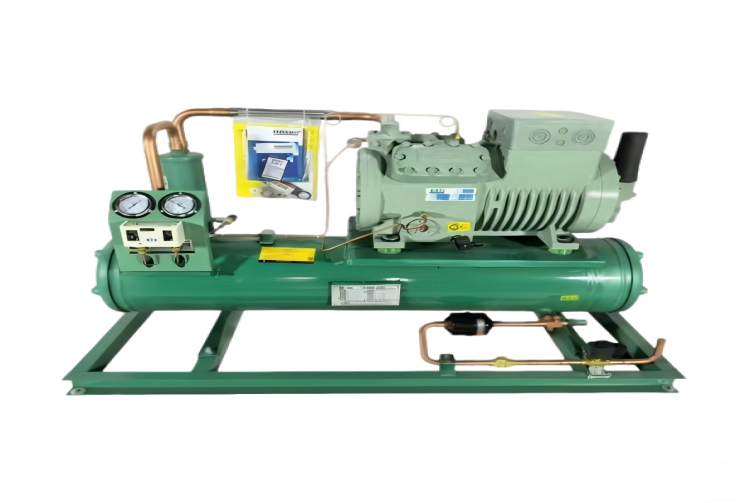
Before picking any part, you need to know which component you are replacing and how it fits into the system. The main parts are:
| Component | Function |
|---|---|
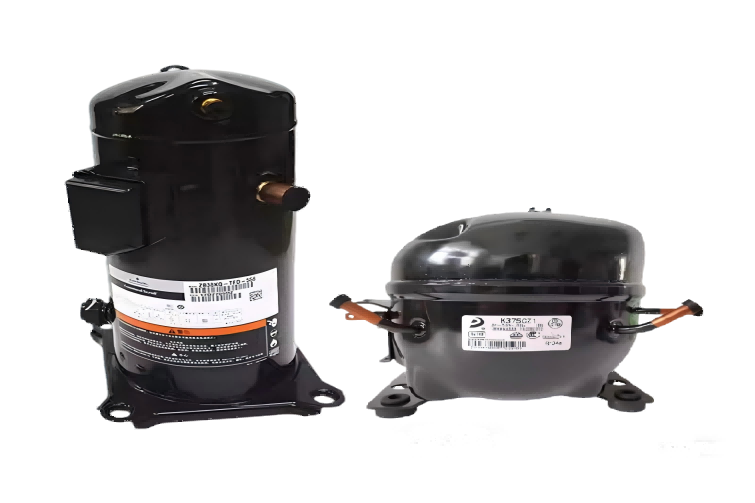
| Compressor | Pumps refrigerant, raises pressure and temperature |
| Condenser | Releases heat, turns refrigerant from gas to liquid |
| Expansion valve (TXV / capillary tube) | Drops pressure, controls refrigerant flow into evaporator |
| Evaporator | Absorbs heat, turns liquid refrigerant into gas |
| Filter drier | Removes moisture, acid, and particles |
| Fan motor (condenser / evaporator) | Moves air across coils |
| Pressure controls & thermostats | Regulate on/off cycles and safety limits |
| Service valves & schrader ports | Allow maintenance and charging |
Always identify the exact failed part before shopping. A misdiagnosis leads to wasted money and time.
2. Match Refrigerant Type
Modern refrigeration parts are designed for specific refrigerants. Using a part rated for R404A on an R290 (propane) system is dangerous and illegal in many countries.
Common refrigerants today:
- R134a – small fridges, automotive AC, some commercial units.
- R404A / R507 – low/medium temperature commercial refrigeration (phased out in many regions).
- R448A / R449A – lower GWP replacements for R404A.
- R290 (propane) – increasingly common in self‑contained commercial fridges and freezers.
- R32 – used in some refrigeration and AC units.
Checklist:
- New part must list the same refrigerant(s) as the original.
- For R290 systems, use only certified explosion‑proof components (compressor, pressure switch, fan motor).
- Never mix refrigerants or use a part rated for a higher‑pressure gas on a lower‑pressure system without verifying compatibility.
3. Verify Key Specifications
Every refrigeration part has technical data that must match or exceed the original. Don’t guess – read the labels.
For compressors:
- Displacement (cc/rev) – affects cooling capacity.
- Voltage and phase – 115V, 230V single‑phase, or 400V three‑phase.
- Starting method – PSC, CSR, or inverter (variable speed).
- Oil type – POE (for R134a/R404a/R448a) vs. mineral oil (for older R12/R22). Using the wrong oil kills a compressor quickly.
- Mounting pattern – bolt hole spacing, suction/discharge fitting sizes.
For expansion valves (TXV):
- Capacity (tons or kW) – match system load.
- Refrigerant type – printed on the valve body.
- Equalizer type – internal or external (external is common for larger evaporators).
- Bulb charge – liquid, gas, or MOP (maximum operating pressure). MOP valves prevent motor overload.
For filter driers:
- Connection size – ¼”, ⅜”, ½” etc.
- Water capacity – usually 3 to 30 cubic centimeters.
- Core type – solid core for general use, or replaceable core for large systems.
- Acid capacity – important if you had a compressor burnout.
For fan motors:
- RPM – high speed for condenser fans (typically 1000–1500 RPM), medium for evaporators.
- Frame size – 42 frame, 48 frame, etc.
- Shaft diameter and length – must match the fan blade.
- Enclosure – open drip‑proof (ODP) vs. totally enclosed (TEAO/TEBC). Use TEAO in humid or outdoor environments.
4. Choose the Right Materials for the Operating Environment
Refrigeration parts are exposed to moisture, temperature swings, and sometimes corrosive chemicals. Material choice is not optional.
| Part | Preferred material | Why |
|---|---|---|
| Condenser coils | Copper tube with aluminum fins (or all‑aluminum for cost) | Good heat transfer, corrosion resistance with coating |
| Evaporator plates | Stainless steel or tin‑plated copper | Resists acidic foods or wet environments |
| Service valves | Brass with O‑rings | Durable, seals well, resists refrigerant attack |
| Fasteners (nuts, bolts) | Zinc‑plated or stainless steel | Prevents rust that can lock threads |
| Gaskets / O‑rings | HNBR or EPDM (for HFCs); Neoprene for older CFCs | Withstands oil, temperature, and pressure |
Avoid generic steel parts on refrigeration lines – they rust from the inside and contaminate the system.
5. OEM vs. Aftermarket – Which One Should You Choose?
| OEM (Original Equipment) | Aftermarket (Compatible) | |
|---|---|---|
| Quality | Guaranteed fit and performance | Varies widely – from excellent to poor |
| Price | Higher (often 2–4x aftermarket) | Lower |
| Availability | May take weeks for older models | Usually in stock |
| Warranty | Standard 1–2 years | Often 90 days to 1 year |
When to choose OEM:
- Compressors for warranty‑covered equipment.
- Control boards with proprietary software.
- Critical safety components (high‑pressure cutouts, burst discs).
When aftermarket is fine:
- Fan motors, filter driers, contactors, capacitors.
- Older equipment where OEM parts are discontinued.
- Non‑critical auxiliary parts (drain heaters, door gaskets).
For aftermarket, stick to well‑known brands (e.g., Tecumseh, Embraco, Danfoss, Copeland) or suppliers with strong quality records. Avoid no‑name parts with missing specifications.
6. Safety Certifications Are Non‑Negotiable
Refrigeration equipment operates under high pressure and sometimes flammable refrigerants. Certified parts reduce fire and explosion risks.
Look for these marks:
- CE (Europe)
- UL (USA/Canada) – especially UL 207 for refrigeration valves, UL 250 for household refrigerators.
- CSA (Canada)
- CCC (China for domestic market)
- ATEX (for R290/R600a components in explosive environments)
If a part has no safety marks and the supplier cannot provide test reports, do not use it in a system with flammable refrigerants or high pressure.
7. Evaluate the Supplier
Where you buy is as important as what you buy. For refrigeration parts, consider:
- Inventory accuracy – Does the supplier stock genuine or verified parts?
- Technical support – Can they read a compressor model code or match a TXV bulb?
- Return policy – 30 days minimum, with clear terms for defective parts.
- Minimum order quantity (MOQ) – For B2B, some suppliers require 50–100 pieces. For repairs, find a seller with MOQ = 1.
Online marketplaces (Alibaba, Amazon Business, eBay) can work, but always check seller feedback specifically about refrigeration parts – not just general sales.
8. Inspect Before Installation
Even when you buy correctly, inspect every part before fitting it:
- Compressor – Check for oil leaks around terminals and welds. Rotate the shaft by hand – it should turn smoothly.
- Filter drier – Must be sealed in a bag with plugged ends. If the bag is open, moisture has already entered – replace it.
- TXV – Look for a straight bulb capillary tube. No kinks or cracks.
- Fan motor – Spin the shaft; listen for grinding bearings. Check the capacitor value (if supplied).
9. Don’t Forget the Little Things
Small refrigeration parts are often overlooked but cause big problems:
| Small part | Why it matters |
|---|---|
| Schrader valve core | Leaks here cause slow refrigerant loss. Use brass cores with Teflon seals. |
| Terminal box cover | Missing covers expose electrical connections to moisture – dangerous. |
| Rubber grommets | Reduce vibration and prevent copper line abrasion. |
| Filter drier adapter | Wrong thread type (metric vs. imperial) leads to cross‑threading and leaks. |
Always order these supporting parts when you buy the main component.
10. Calculate Total Cost – Not Just Purchase Price
A cheap compressor that fails after three months costs you:
- Original part price
- Replacement labor (2–3 hours)
- New refrigerant charge
- Downtime for a commercial cold room (lost food/product)
A quality compressor that lasts 10 years is cheaper in the long run. For commercial refrigeration, total cost of ownership matters far more than upfront price.
Final Checklist Before Buying
☐ Refrigerant type matches.
☐ Voltage, phase, and capacity are correct.
☐ Material is suitable for the environment (copper, brass, stainless).
☐ Safety certification is present (CE, UL, CSA, etc.).
☐ Supplier has a good return policy and technical support.
☐ For aftermarket parts, brand or test reports are available.
☐ Small accessories (cores, gaskets, adapters) are included or ordered separately.
Conclusion
Choosing refrigeration equipment parts is a technical process, but it becomes straightforward when you follow a system: identify the failed component, match refrigerant and specifications, verify materials and certifications, and buy from a trustworthy supplier.
Whether you are maintaining a walk‑in freezer, repairing an ice maker, or building a custom cooling system, the same rules apply. Quality parts cost a bit more upfront but save you from repeated breakdowns, safety hazards, and lost product. Invest the time to choose right – your refrigeration system will thank you.